
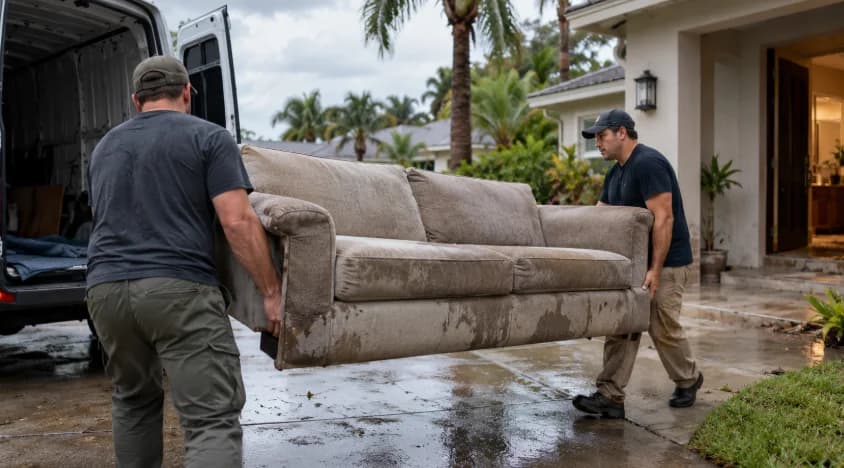
If your couch got wet during a Tampa storm, first figure out what kind of water reached it and how long it has been wet. A couch soaked by floodwater should generally be discarded because the water may carry contaminants into the upholstery. If clean rainwater leaked through a roof or window, dry the couch quickly and contact a furniture restoration specialist if it’s valuable. At Tampa Junk Removal Pros, we handle furniture removal across Tampa Bay, but a restoration expert should assess a couch you hope to save.
Water-damaged couch after a Tampa storm: first steps
Keep people and pets away from standing water and any area with possible electrical hazards. If the room is safe to enter, take photos of the couch and surrounding damage before moving anything. Your insurer may want documentation, so check your policy or contact your adjuster before disposal.
Next, note what got wet. A roof leak or rain blowing through an open window is different from storm surge, street flooding, or water that may have mixed with sewage. Floodwater can contain contaminants, and upholstered furniture absorbs moisture below the surface.
The CDC advises throwing away upholstered furniture that can’t be cleaned and dried quickly after a flood or disaster. It also says to remove wet items within 24 to 48 hours to reduce mold growth. Read the CDC’s cleanup guidance for disasters before handling a soaked couch or other water-damaged belongings.
When should you throw away a wet couch?
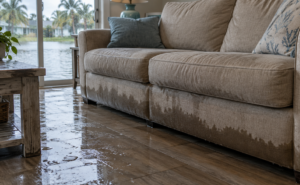
Discard the couch if floodwater or sewage reached it, if you see mold, or if it developed a musty odor. The same goes for a couch that stayed damp for more than a day or two, especially if the cushions and inner padding remain wet. The fabric may feel dry while moisture lingers inside.
Don’t rely on a quick wipe-down or a deodorizer to make a flood-soaked couch safe. Those steps won’t remove contaminants trapped inside cushions or padding. If someone in your household has asthma, allergies, or a weakened immune system, avoid exposing them to a moldy area or asking them to handle the couch.
Clean rainwater calls for a different assessment. If the couch only got slightly wet and you caught it quickly, remove the cushions, blot up moisture, and use appropriate extraction and drying equipment. The U.S. Environmental Protection Agency notes that upholstered furniture can be difficult to dry fully within 48 hours. For an expensive or sentimental piece, ask a qualified restoration professional to assess it promptly instead of guessing.
How to prepare a couch for removal
If you’ve decided to discard it, take a few minutes to plan the removal:
- Photograph the damage and check with your insurer before disposal.
- Keep the couch away from clean furniture, clothing, and high-traffic areas.
- Don’t let children or pets play near the wet or moldy upholstery.
- Check your local waste provider’s rules before leaving it at the curb.
- Arrange a safe path out of the room, especially if the couch is large or the floor is wet.
Wear gloves if you need to touch the couch. If mold is visible or the water may have been contaminated, follow public health guidance for protective equipment and cleanup. Don’t attempt to carry a heavy couch through a flooded room or down wet stairs if doing so could cause a fall or spread contamination.
A sectional can be especially awkward to move. Measure doorways and hallways before attempting removal, and check whether the pieces separate. If the couch is stuck, don’t force it through a doorway or lift it without enough help.
Tampa curbside pickup and disposal rules
Storm cleanup instructions can change by city and by event. Before setting a couch outside, contact your waste provider and ask whether it accepts storm-damaged upholstered furniture, whether you need a special pickup, and where to place the item. Don’t assume that regular trash collection or a storm debris route will take it.
Tampa Junk Removal Pros serves Tampa and surrounding Tampa Bay communities. Our junk removal service covers furniture removal, loading, and cleanup. We provide an upfront estimate before work begins. Contact us with the couch’s location, size, and condition so we can confirm whether we can handle the removal.
Should you try to save it or replace it?
Think about the source of the water, how quickly the couch can dry, and its condition before the storm. A couch with clean rainwater on one surface may be worth a restoration assessment. A couch that sat in floodwater, smells musty, or has damp padding is a different situation. The cost of professional restoration may also be hard to justify for an older or inexpensive couch.
If you’re unsure, don’t bring the couch back into a dry room while you decide. Keep it away from household items and ask a restoration professional for guidance. For a couch that needs to go, check curbside requirements or request an estimate for furniture removal in Tampa. Once you know how it got wet and how long it stayed damp, you can make a safer decision about whether to restore it or have it hauled away.